Swing Set Assembly in Niagara: DIY or Hire a Pro? (2026 Guide)
October 12, 2026
5 Signs It’s Time to Change Your Door Locks in Niagara (2026 Guide)
October 14, 2026
Every wall tells a story: the doorknob that punched through the hallway, the TV bracket that ripped out of the wall, the corner chewed up by a moving couch. Drywall repair is one of the most common jobs we get called for across Niagara — and one of the most satisfying, because a wall that looked ruined can be flawless again in a single visit. Here’s the honest guide: how to fix drywall holes yourself, and when it’s smarter to call a pro.
How to repair drywall: the step-by-step method
Small holes (nail pops, screw holes, dents) and medium holes (doorknob dents up to a few inches) are genuinely DIY-friendly. Here’s the professional process:
Step 1: Prep the damage
Knock off loose paper, crumbled gypsum, or flaking paint around the hole with a utility knife — a patch only bonds to a clean, solid edge. For nail pops, drive the nail slightly below the surface or add screws above and below to re-secure the drywall.
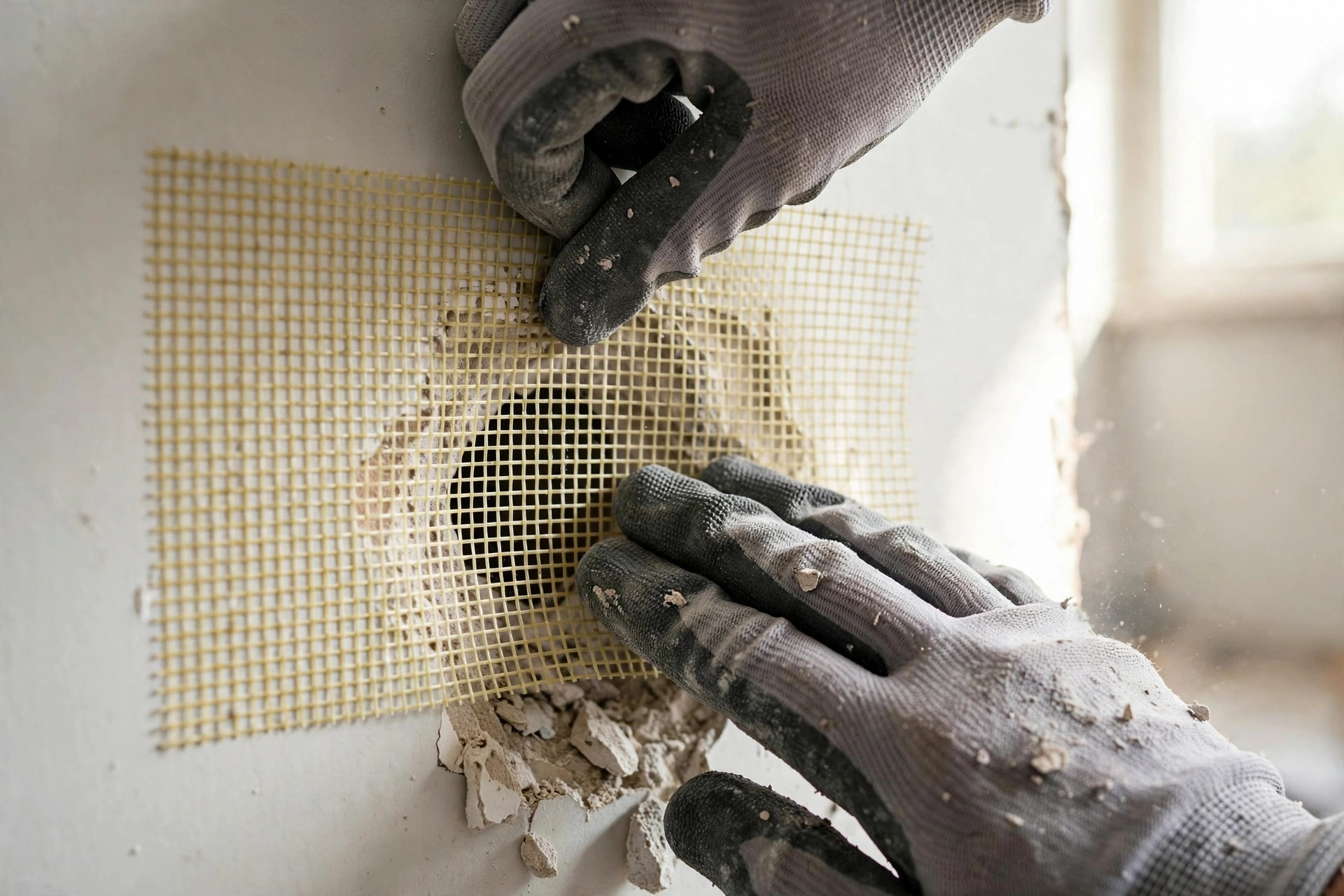
Step 2: Apply mesh tape or a patch
For holes under about 4 inches, self-adhesive fiberglass mesh tape is all you need — it bridges the gap and stops the compound from cracking later. For bigger holes (4–12 inches), use a self-adhesive aluminum mesh patch for a firm backing.
Step 3: First coat of joint compound
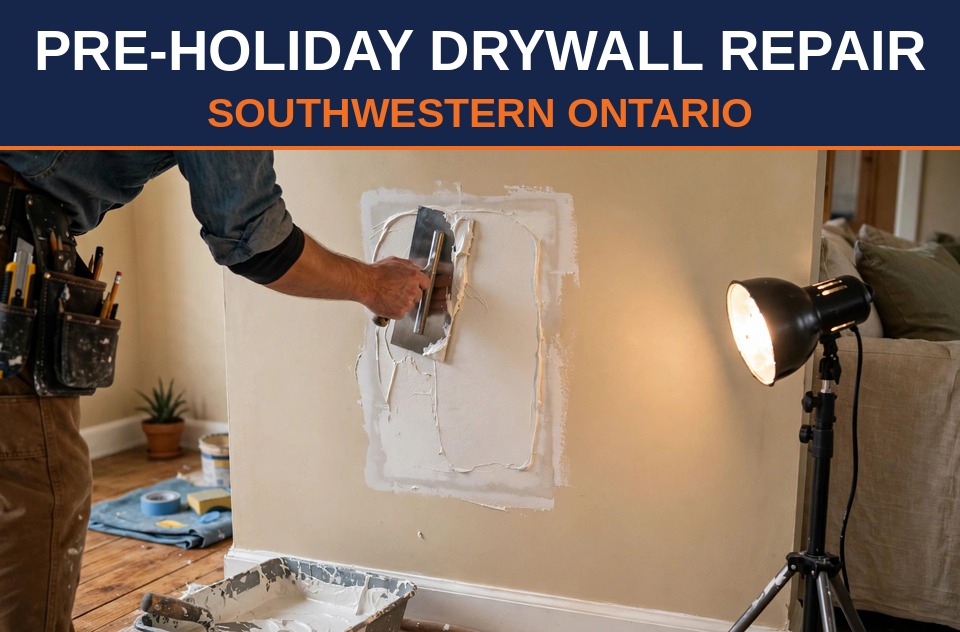
Using a 6-inch taping knife, spread all-purpose joint compound over the tape or patch, feathering the edges out 4–6 inches beyond the repair. Don’t aim for perfect — the first coat is about coverage. Let it dry completely (12–24 hours, longer in a damp basement).
Step 4: Second and third coats
Apply a second coat with a wider knife (8–10 inches), feathering further out. A third thin skim coat is what makes the patch truly invisible — each coat thinner than the last. The biggest DIY mistake is laying compound on too thick; it dries slowly and shrinks, cracking at the edges.
Step 5: Sand smooth
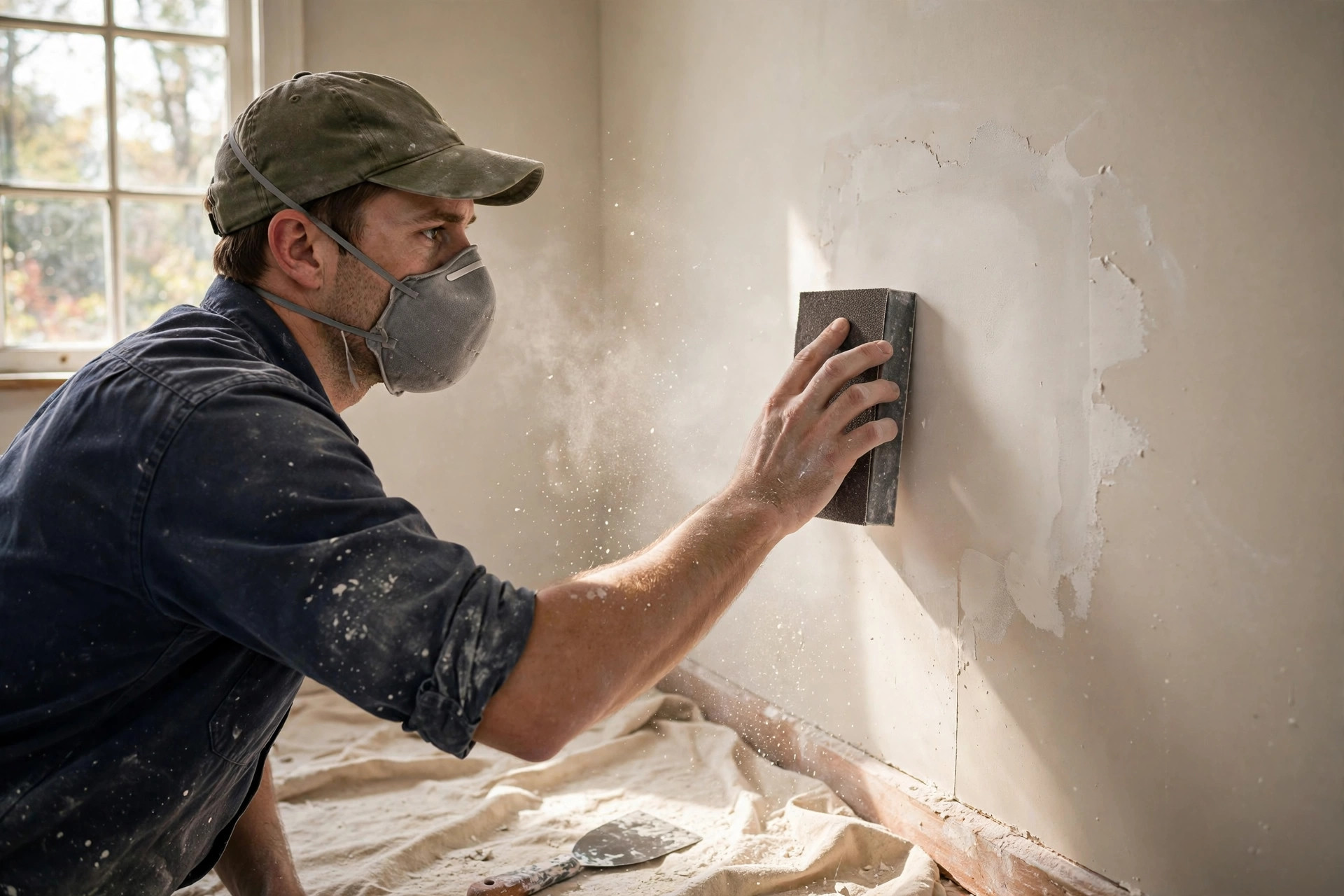
Once the final coat is bone dry, sand with 120-grit sandpaper or a sanding sponge using light, even pressure. Run your hand over the repair — if you can feel an edge, sand more. A work light held at an angle reveals imperfections your eyes miss.
Step 6: Prime and paint
Always prime the patched area before painting — joint compound absorbs paint differently than the surrounding wall, and skipping primer leaves a visible “flash” mark even with perfect sanding. Then paint the whole wall (or at least corner to corner) for a seamless blend.
Repairing large drywall holes (the California patch method)
For holes bigger than about a foot square, you need a proper patch. The pro shortcut is the California patch: cut a drywall scrap 2 inches larger than the hole on every side, score and peel the gypsum off the back to leave a 2-inch paper flange, butter the flange with joint compound, press it into the hole, and feather two or three thin coats over it. Stronger and flatter than a wood-backing patch, and it needs only one scrap of drywall.
When to call a pro for drywall repair in Niagara
DIY stops being sensible when any of these apply:
- Water damage. A stained or soft spot means the drywall is wet inside. It must be cut out, the leak fixed, and the area dried before patching — painting over water damage just hides a mold problem.
- Cracks that keep coming back. A crack that reappears after patching usually signals movement — settling or seasonal expansion. A pro diagnoses the cause instead of patching the symptom.
- Ceiling repairs. Overhead compound work is hard to get smooth, and ceilings hide plumbing and electrical. One misplaced screw can ruin your day.
- Matching texture. Orange-peel, knockdown, and popcorn finishes are hard to replicate without practice and the right tools.
- It’s a rental or a sale. If you’re a Niagara landlord prepping a unit between tenants, or selling a home, a flawless finish matters — buyers notice bad patches instantly.
Our drywall repair service in Niagara covers Niagara Falls, St. Catharines, Welland, Thorold, Fort Erie, and Niagara-on-the-Lake. Most small patch jobs are done in a single visit; we bring everything, including dust control, so your home stays clean.
How much does drywall repair cost in Niagara?
Prices vary by size and finish. Honest 2026 ranges for Niagara:
- Small holes and dents (nail holes, doorknob dents): typically $75–$150 per repair, or bundled into a handyman visit.
- Medium holes (4–12 inches): $150–$300, including patch, compound, sanding, and prime.
- Large holes (1–4 sq ft): $250–$500, depending on coats and texture matching.
- Ceiling or water-damage repairs: quoted per job — drying time and material replacement add scope.
DIY runs $20–$40 in materials for a small repair, but factor in your time — three coats means three days of drying — and the risk of a visible patch that needs redoing.
Common drywall repair mistakes to avoid
- Skipping the primer. The number-one reason a “perfect” patch stays visible — compound flashes through paint. Always spot-prime first.
- Applying compound too thick. Thick coats shrink, crack, and take days to dry. Thin coats, more of them.
- Sanding too aggressively. Light pressure, frequent checks — you can sand right through a mesh patch.
- Painting before it’s dry. Joint compound looks dry long before it is — paint over damp compound and it bubbles. Give it a full 24 hours.
- Ignoring what’s behind the wall. Before driving screws or cutting a big patch, check for wiring and pipes — a cheap stud finder prevents expensive surprises.
Drywall repair FAQ
How long does drywall repair take?
A small patch takes about 30 minutes of hands-on work, but the full job spans 2–3 days because each coat needs 12–24 hours to dry.
Can you repair drywall without repainting the whole wall?
Sometimes. If you have the exact original paint and it was applied recently, a spot repair can blend well. But paint fades and sheens change — for walls older than a couple of years, painting corner to corner gives the only truly invisible result.
Is drywall repair dusty?
Sanding joint compound creates a fine white dust that gets everywhere. Seal the room, wear a dust mask, and use a sanding sponge — or better, a vacuum sander.
What’s the difference between spackle and joint compound?
Spackle is for tiny nail holes and dries fast but shrinks — fine for pin holes, bad for anything bigger. All-purpose joint compound is stronger, sands smoother, and is the right choice for patches over mesh tape.
Do you offer same-day drywall repair in Niagara?
Yes — BuildNest offers same-day and next-day bookings across the Niagara region for most drywall repairs. Call or text 905-519-1011 with a photo of the damage for a fast flat-rate quote.
Get your walls back to flawless
Holes, dents, cracks, and water stains don’t get better on their own — but they’re some of the fastest, most affordable fixes a handyman can make. Skip the three days of drying and dust and let BuildNest handle it. Call or text 905-519-1011 for drywall repair in Niagara — flat-rate quotes, fully insured, and walls you’ll never find the patch on.