
How Long Does Interior Painting Take in Niagara? Room-by-Room Timeline (2026 Guide)
October 16, 2026
Door Installation in Niagara: 7 Questions to Ask Before You Hire (2026 Guide)
October 17, 2026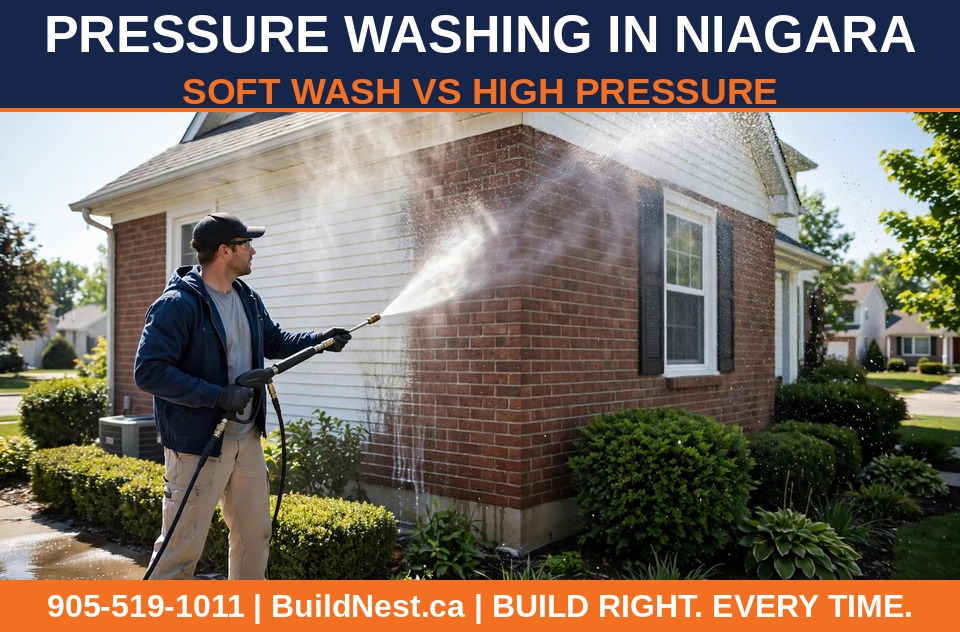
That green film creeping up your siding, the grey-black grime on the driveway, the algae strip along the fence — it’s not just dirt, and blasting it all with the same jet of water can do more harm than good. Most Niagara homeowners don’t realize there are two very different exterior-cleaning methods, and using the wrong one can strip paint, force water behind siding, or crack stucco.
This guide breaks down the difference between soft washing and pressure washing in Niagara, which surfaces need which method, what it costs in 2026, and when to call a pro. One honest takeaway up front: the right method matters more than the strongest machine.
What Is Pressure Washing?
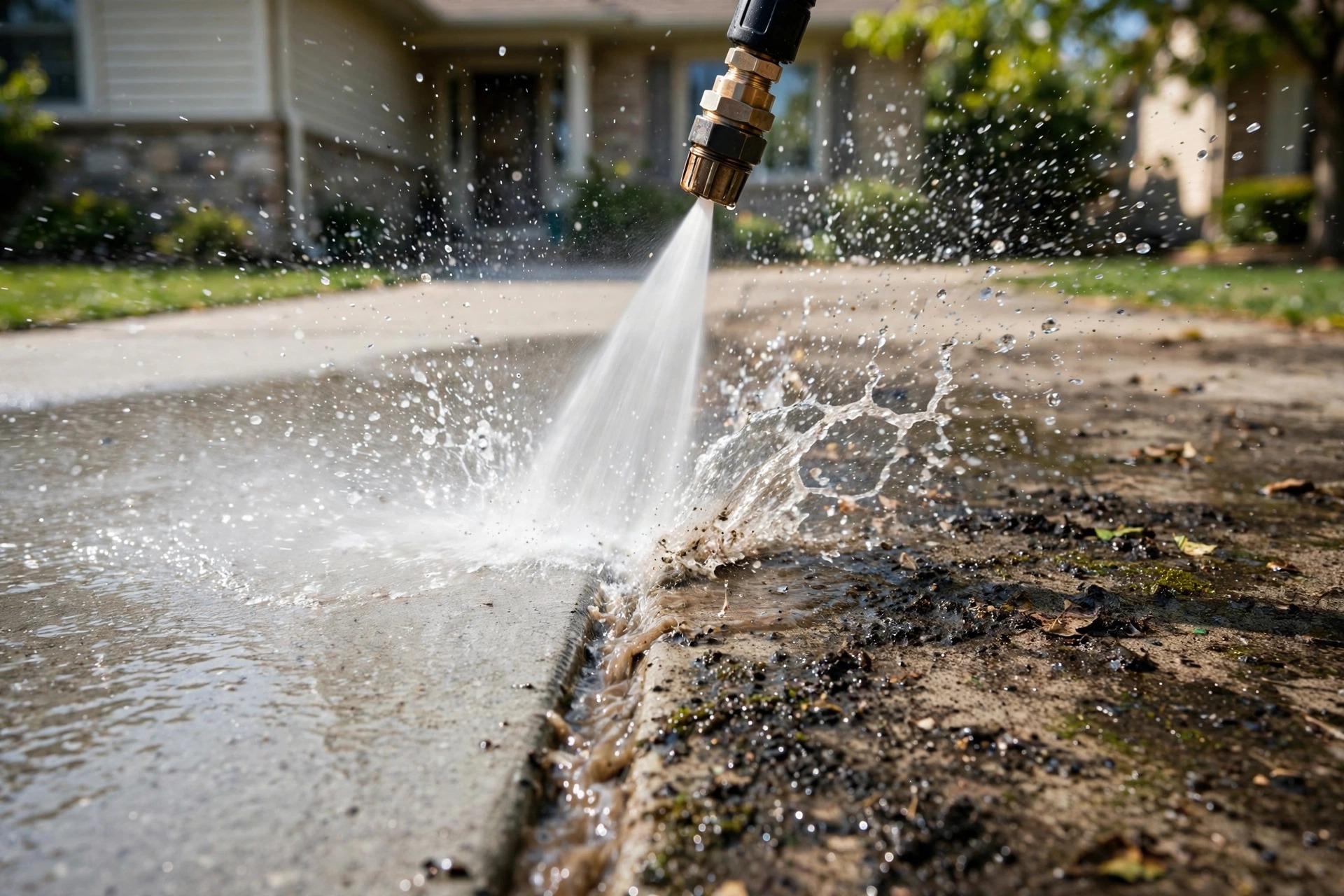
Pressure washing (sometimes called power washing) uses a high-pressure stream of water — typically 1,300 to 3,000 PSI — to physically blast away dirt, grime, moss, and stains from hard surfaces. The pressure does the cleaning; little or no detergent is needed.
It’s the right call for surfaces that are hard, flat, and can take the force:
- Concrete driveways and walkways
- Brick and stone walls (in good condition)
- Paver patios and retaining walls
- Metal siding and gutters (at safe distance and angle)
What Is Soft Washing?
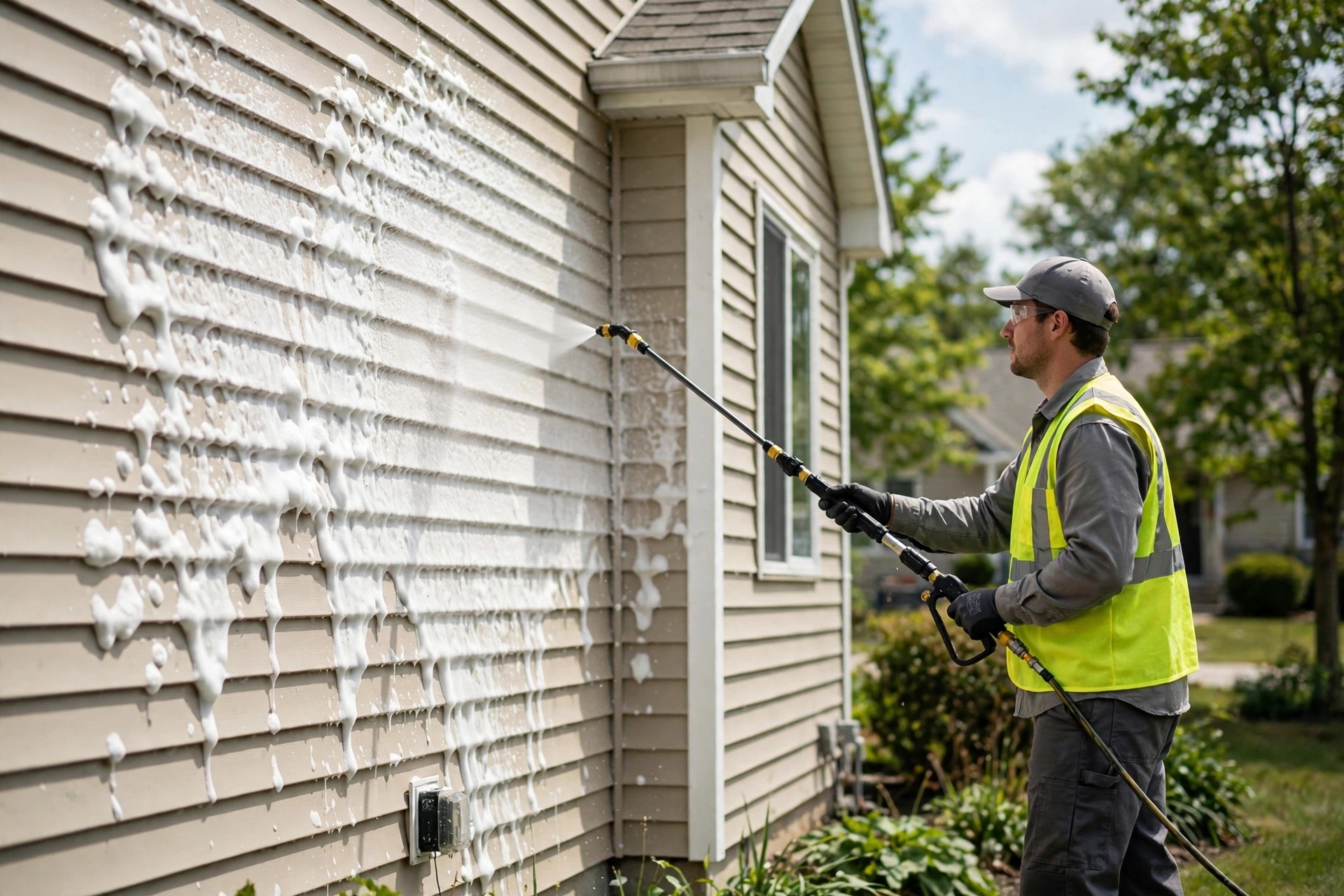
Soft washing uses low-pressure water (roughly garden-hose pressure, under 500 PSI) combined with specialized cleaning solutions that break down mold, algae, mildew, and grime so it can be rinsed away gently. The detergents do the cleaning — not the force.
This is the safe method for delicate or organic-growth-prone surfaces:
- Vinyl and wood siding
- Asphalt shingle roofs (high pressure here destroys the granules and voids warranties)
- Stucco and EIFS
- Painted surfaces and wooden decks
- Fences and screens
Soft Washing vs Pressure Washing: The Key Differences
Cleaning power: Pressure washing removes surface grime instantly through force. Soft washing kills and removes organic growth at the root — algae and mold take longer to return after a soft wash, often a year or more, because the treatment sanitizes the surface.
Damage risk: High pressure can etch concrete, drive water behind siding and into wall cavities, strip paint, shred shingle granules, and crack older mortar. Soft washing carries almost no surface-damage risk when done with the right detergents.
Result longevity: A blasted-off surface can look great for weeks, then the algae regrows from its roots. Soft washing’s detergents kill spores, so the clean lasts noticeably longer — particularly on Niagara’s shaded north-facing walls where humidity lingers.
Cost: Soft washing often costs a bit more per job because of the specialty chemicals and dwell-time involved, but it can be cheaper over time since cleanings are needed less often.
Which Method Does Your Home Need?
Match the method to the surface, not to what the rental store hands you:
Driveway and walkways — pressure wash. Concrete is made for it. Years of tire marks, oil drips, leaf stains, and moss come off dramatically, and Niagara’s freeze-thaw cycles make clearing trapped moisture and organic matter important before winter.
Vinyl siding — soft wash. High pressure drives water behind the panels and can crack them, especially in cold weather. The green algae that creeps up shaded siding across St. Catharines and Niagara Falls is exactly what soft-wash detergents are formulated to kill.
Roof — soft wash only. Never pressure wash asphalt shingles. It strips the protective granules, shortens the roof’s life, and usually voids the manufacturer’s warranty. Soft-wash roof treatments remove the black streaks (Gloeocapsa magma algae, very common around the Niagara peninsula’s humidity) without damage.
Brick and stone — usually pressure wash, gently. Sound masonry handles moderate pressure well. But old, crumbly mortar needs a soft approach — test a small area first.
Wooden deck and fence — soft wash, or very low pressure. A concentrated jet scars wood fibers and forces you to sand and restain sooner. Low pressure with a wide fan tip, or a soft wash, keeps the wood intact.
Stucco — soft wash. Stucco is porous and cracks under high pressure; the driven-in water then freezes in winter and worsens the damage.
When to Wash Your Home in Niagara
Most Niagara homes benefit from an exterior wash every 1–2 years. Mid-October is actually an ideal window: it’s the last chance before winter freeze-up to clear the grime that traps moisture against your siding, and washing in fall means the house goes into winter clean rather than sealing a year of algae under ice and snow.
Niagara’s lake-effect humidity is the real driver here. Homes in Niagara Falls, Welland, Fort Erie, Thorold, and Niagara-on-the-Lake sit close to water, and shaded walls hold dampness for days after rain — perfect conditions for algae and mildew. If the north side of your house greens up every year, that’s humidity, not neglect, and a soft wash is the fix.
What Does Exterior Washing Cost in Niagara? (2026)
Typical local ranges for professional pressure washing in Niagara:
- House soft wash (siding): $250–$450 for an average two-storey home
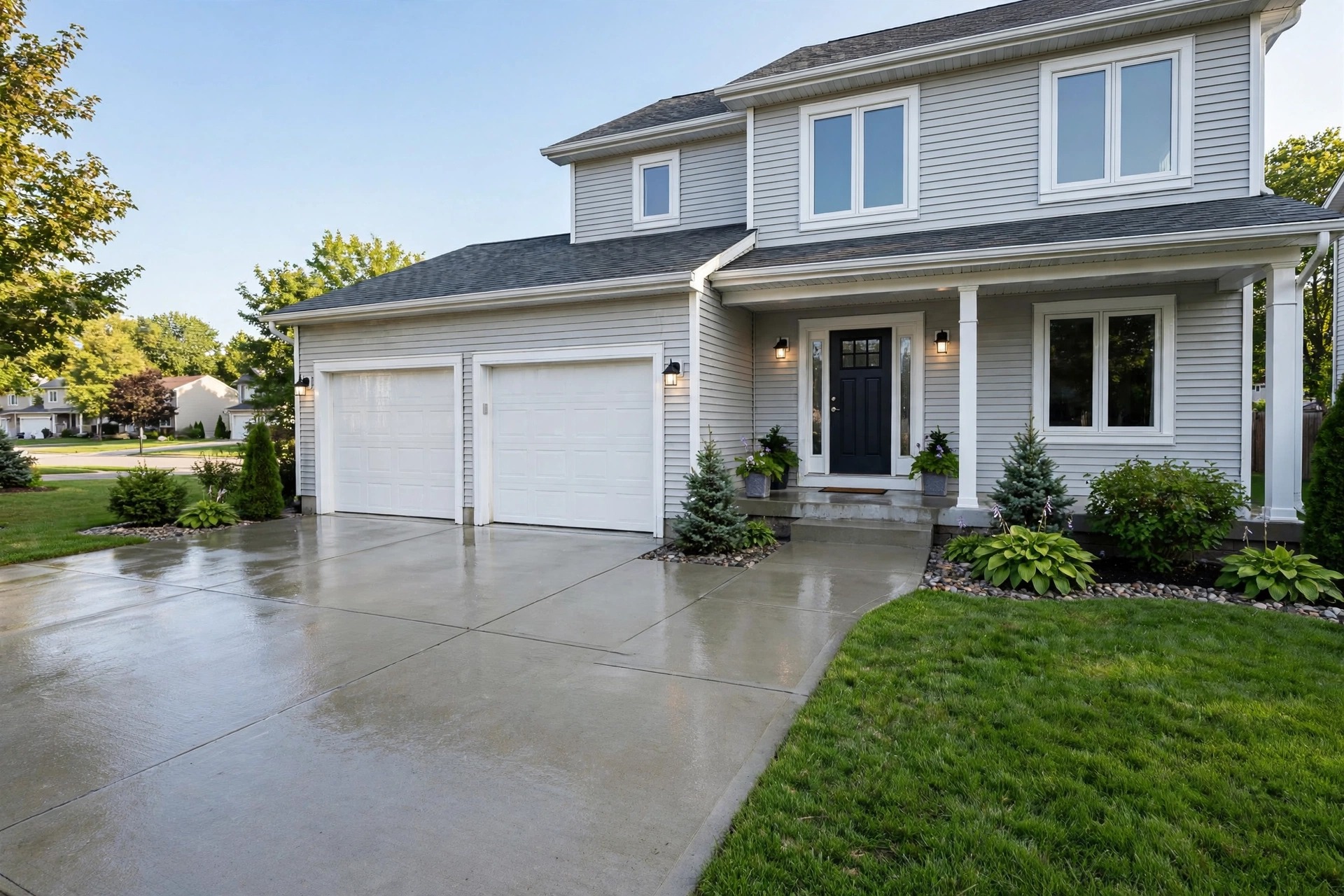
- Driveway pressure wash: $150–$300 depending on size and staining
- Roof soft wash: $350–$600 depending on pitch and algae severity
- Deck or fence: $150–$300
- Whole-property package (house wash + driveway + walkways): $400–$700
The DIY risk is real: one wrong nozzle at 3,000 PSI can etch a driveway or force water behind siding that shows up as interior mold months later. Starting on delicate siding is an expensive place to learn.
FAQ
Can I just use a pressure washer on everything? Technically yes, practically no. Concrete loves it; siding, roofs, stucco, and wood don’t. Using high pressure on delicate surfaces is the #1 cause of DIY exterior-cleaning damage.
Will soft washing kill my plants? A proper soft wash includes wetting down and rinsing landscaping before and after, and the detergents used by pros are designed to be plant-safe when applied correctly. If you’re DIY-ing, pre-wet all nearby plants and rinse them again after.
How long do the results last? A soft wash typically keeps siding clean for 12–18 months in Niagara’s climate. Pressure-washed concrete stays clean until it’s driven on and rained on again — usually looking fresh for 6–12 months.
Is October too late in the year to wash my house? No — it’s one of the best times. You clear a season of buildup before winter locks it in, and daytime temperatures are still fine for detergents to work and surfaces to dry.
Does washing the house increase its value? A clean exterior is one of the cheapest curb-appeal upgrades there is — important whether you’re listing or just tired of the green film on your siding.
Get It Done Right — The First Visit Is Free to Quote
BuildNest handles both soft washing and pressure washing across the Niagara region — pressure washing service in Niagara, from Niagara Falls and St. Catharines to Welland, Thorold, Fort Erie, and Niagara-on-the-Lake. We match the method to each surface so your home gets clean without the damage, and we handle the driveways, siding, decks, and walkways most homes need every year or two.
Text or call 905-519-1011 for a free quote — same-week availability, and one visit usually covers the whole exterior. BUILD RIGHT. EVERY TIME.