
How to Winterize a Swing Set in Canada Before the First Snow (2026 Guide)
October 18, 2026
Japandi Living Room in Ontario: How to Mount Your TV the Minimalist Way (2026 Guide)
October 18, 2026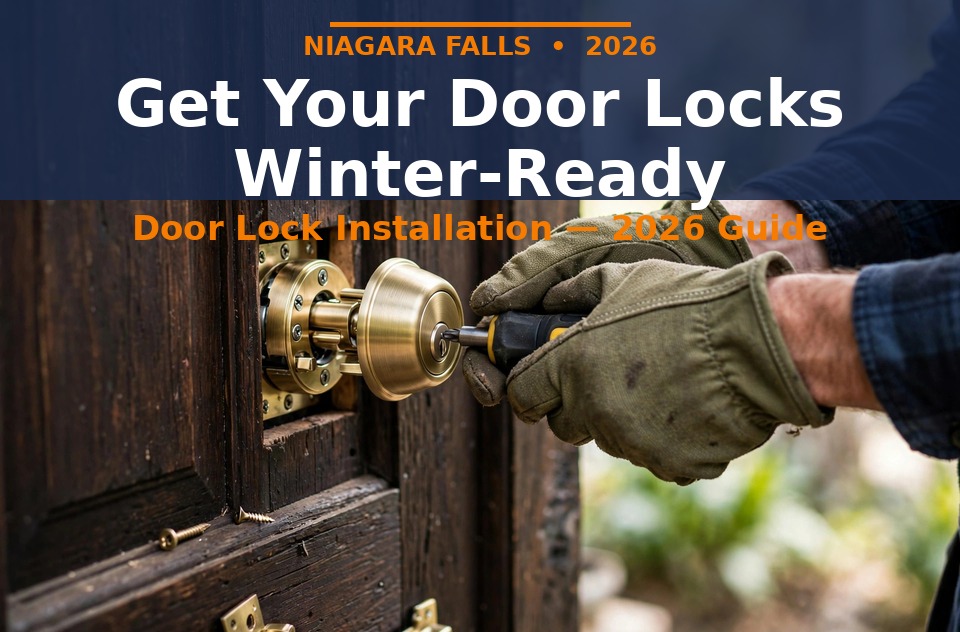
Door Lock Installation in Niagara Falls: Winter-Ready Locks Before the First Freeze (2026 Guide)
This morning, Niagara woke up to its first real frost of the season. Overnight temperatures dipped toward freezing, and if your front door lock felt stiff or stubborn when you turned the key, you are not imagining it. Cold is a lock’s quiet enemy — and here in Niagara Falls, where winter swings from wet to deep-freeze overnight, locks take more punishment than most homeowners realize.
The good news: a small amount of winter prep now prevents most cold-weather lock failures. This guide explains why locks seize up in the cold, what you can do yourself, and when a professional door lock installation in Niagara Falls is the smarter move.
Why Door Locks Get Stiff When Temperatures Drop
A lock is a precision mechanism with tiny tolerances. Winter attacks it on three fronts:
1. Metal contracts. Brass and steel pins inside the cylinder shrink fractionally in the cold. That is enough to make the pins bind against the plug, so the key turns with effort — or not at all.
2. Moisture freezes. Niagara’s fall weather is damp. Condensation seeps into keyways, then freezes overnight — a single freeze-thaw cycle can leave enough ice to jam the pins.
3. Lubricant thickens. Old oil or grease inside the cylinder turns sluggish near freezing. Worn-out lubricant is the most common reason a lock that “worked fine last month” suddenly fights you.
Add wood doors that swell and shrink with humidity — moving the strike plate a millimetre or two out of line — and it is no surprise that handymen get their busiest lock calls between December and February.
5 Steps to Winterize Your Door Locks (Do These Now)
1. Switch to dry graphite lubricant
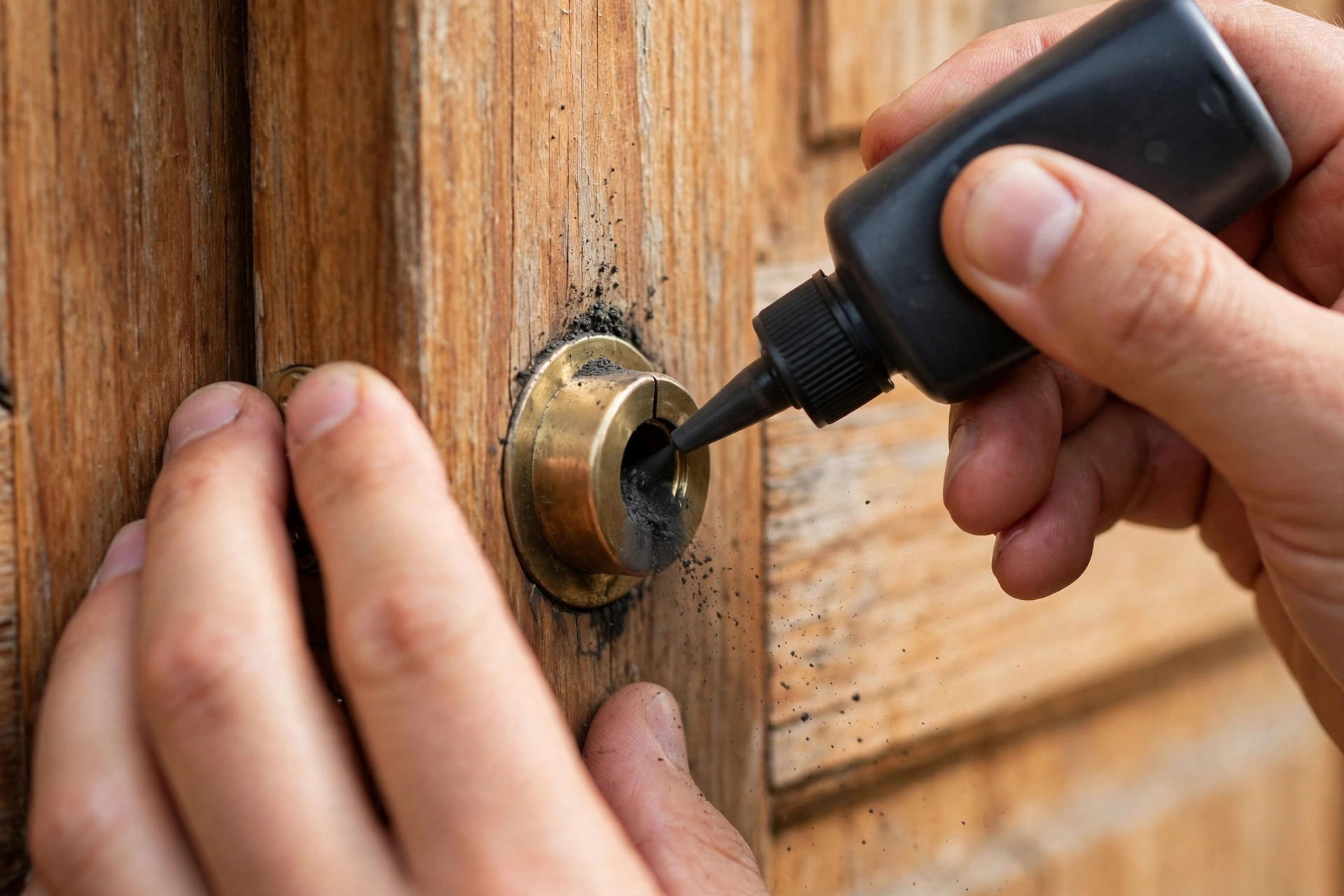
This is the single highest-value move. Squeeze dry graphite powder or a graphite-based lock lubricant directly into the keyway, then work the key in and out a few times to distribute it. Unlike oil, graphite does not gum up or thicken in the cold, and it does not trap the moisture that causes icing.
Avoid spraying WD-40 or silicone into a lock. They feel like a fix for a week, then attract dust and moisture that make winter worse.
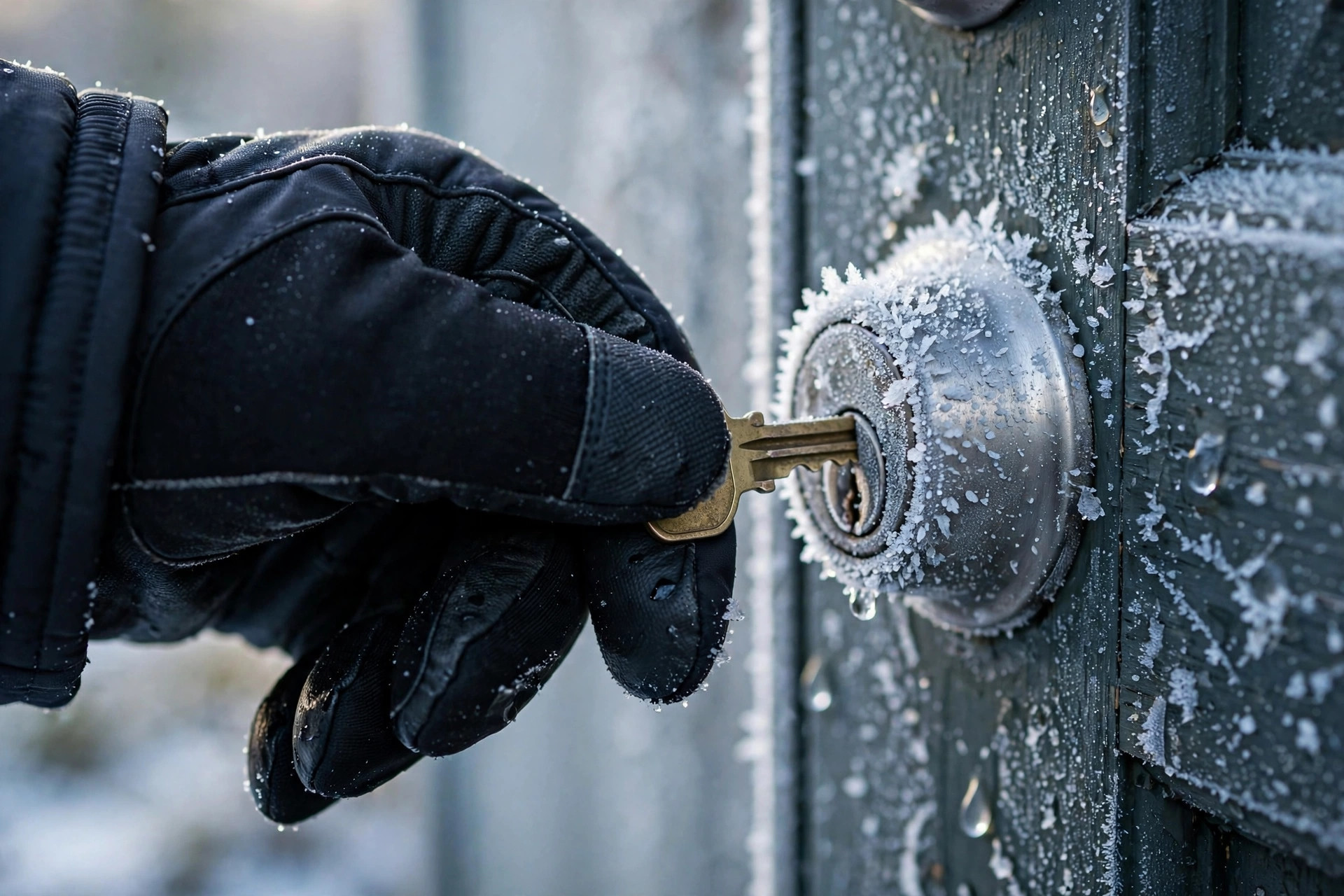
2. Know how to de-ice a frozen lock safely
When a key refuses to turn on a frosty morning, reach for lock de-icer (alcohol-based) rather than force. Warm the key with your hands, slide it in slowly, and give the de-icer 30 seconds to work. Then insert the key gently — never torque a cold key, because snapped keys are an expensive lesson. And never pour hot water on the lock: it melts the ice now and refreezes into a thicker block within the hour.
3. Check the strike plate alignment
Close the door slowly and watch where the latch meets the strike plate. If the latch drags or the door needs a shoulder to close, the alignment is off. Mark the drag point with painter’s tape, then reposition the strike plate or file its edge slightly. A dragging latch is a latch that will freeze shut.
4. Tighten everything
Grab a screwdriver and check the mounting screws on every exterior handle and deadbolt. Wood movement loosens hardware over the fall, and loose hardware accelerates wear on the internal pins. If screws spin freely in stripped holes, a toothpick-and-glue repair is a simple fix — but do it before the lock works itself loose entirely.
5. Mind the smart-lock battery
Cold murders batteries. Change your smart lock batteries now, not in January, and keep the mechanical key accessible. If the lock has been sluggish on warm days, it will only get worse in the cold — a sign the latch alignment needs attention, not just the battery.
Repair or Replace? When It Is Time for a New Lock
Winter prep extends the life of a healthy lock, but some locks are simply done. Consider replacing rather than nursing along when:
- The key needs a jiggle on most attempts even after graphite treatment
- The exterior finish is corroded or the keyway shows heavy rust
- The lock is more than 15–20 years old with no record of maintenance
- Door and frame have shifted so much that alignment fixes no longer hold
- You want to upgrade security anyway (grade 1 or 2 deadbolt, smart lock)
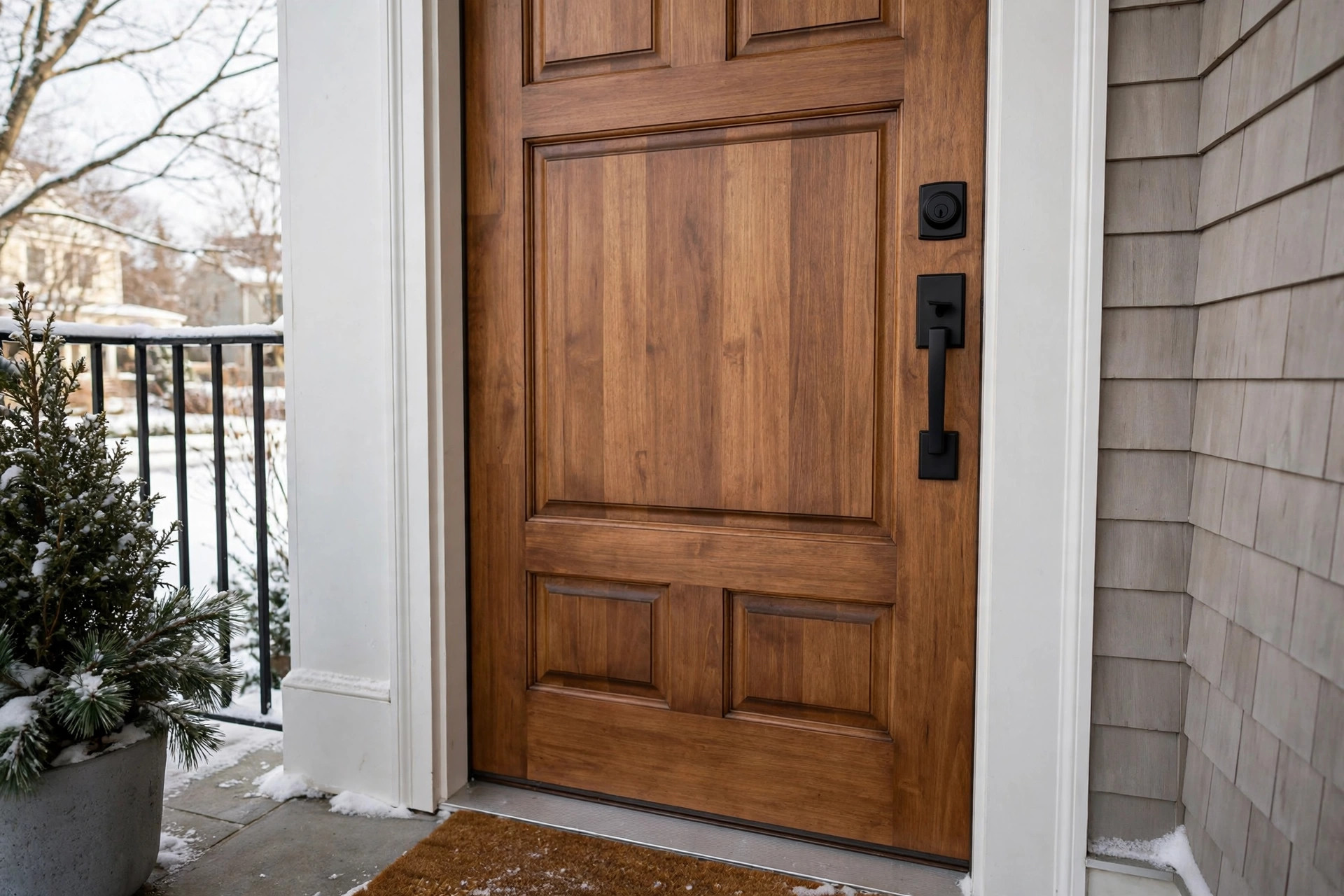
Roughly speaking, in the Niagara area a straightforward deadbolt door lock installation in Niagara Falls typically runs $80–200, a full smart-lock install $150–250, and a simple rekey $25–50 per cylinder. A pro can usually complete a deadbolt swap in under an hour, alignment included. If you are still deciding between refreshing what you have and starting over, our earlier guide on door lock installation across Niagara breaks down the signs a lock is past saving.
When to Call a Pro Instead of DIY
Lubrication, de-icing, and screw tightening are safe DIY territory. Call a professional when the job involves boring new holes, re-drilling a misaligned door, replacing a lock on a metal or fiberglass door, or anything with a smart lock’s wiring or strike mortising. A botched bore leaves the door structurally weaker — which defeats the purpose of the lock.
This is exactly the kind of small job that local handymen handle daily through the fall. BuildNest folds lock servicing into its winterization visits across the Niagara region, so a stiff deadbolt can be sorted at the same time as the rest of the house’s seasonal prep.
Frequently Asked Questions
Can I use WD-40 to fix a stiff lock before winter?
Briefly, yes — but it is a trap. Petroleum-based sprays dissolve the existing lubricant and then evaporate, leaving the lock drier than before, and they attract dust and moisture that freeze in the keyway. Use dry graphite lubricant instead; it is made for cold weather.
My key broke off inside the lock. What now?
Do not drill it out — that destroys the cylinder and often the door. A broken-key extractor tool can usually pull it in seconds; otherwise this is a 20-minute job for a pro.
Should I replace my locks or rekey them?
Rekeying ($25–50 per cylinder) changes which key works and is the budget answer for lost keys or new tenants. Replacement is the answer for worn, corroded, or misaligned locks — and it is the moment to upgrade grade and finish. If winter stiffness is your complaint, replacement with proper alignment solves the root cause.
Do smart locks work in Niagara winters?
Yes, if installed and maintained correctly. The two failure modes are batteries (change them each fall) and latch alignment (a dragging latch draws more current and wears the motor). Keep the mechanical backup key accessible — a dead battery at -15°C is the wrong time to discover you misplaced it.
How fast can a handyman install a door lock?
A standard deadbolt installation with proper alignment usually takes 45–60 minutes, including the strike-plate upgrade. If you are bundling it with other winterization work — a very common pattern this time of year — most Niagara handymen, including BuildNest at 905-519-1011, quote the lock as a line item on a half-day visit.
The Takeaway
The first frost is nature’s reminder: cold finds every weakness in a lock. Ten minutes with graphite lubricant, a de-icer in the junk drawer, and a screwdriver check of your hardware will carry most Niagara Falls homes through the winter. For the rest — locks that fight you even after treatment, doors that will not align, and upgrades you have been putting off — get them sorted before the deep cold arrives.