

Playset Assembly in St. Catharines: Buying & Building a Christmas Playset (2026 Guide)
October 19, 2026
Moving Help in Niagara Falls: Your November 1 Move-In Survival Guide (2026)
October 19, 2026
Eavestrough Cleaning in Niagara: Late October Is Your Last Call Before Winter (2026 Guide)
It’s Monday, October 19, and Niagara’s maples are dropping leaves by the bucketful. This week’s forecast is a gift — sunny skies, highs of 15–19°C, lows of 5–9°C — and Environment Canada’s fall outlook leans toward above-normal temperatures for the season. But mild weather is deceptive: every falling leaf lands somewhere, and your eavestroughs are where most of them end up.
By the time November’s cold rains and the first hard freeze arrive, troughs packed with wet leaf mulch become ice dams waiting to happen. That’s why the last two weeks of October are the deadline for eavestrough cleaning in Niagara: the leaves are mostly down, ladder work is still safe on dry days, and the ground hasn’t frozen yet. Here’s how to get it done right in 2026.
Why late October is the deadline in Niagara
Most broadleaf trees across St. Catharines, Niagara Falls, Welland, Fort Erie, and Niagara-on-the-Lake shed through October. Clean your troughs in early September and October’s leaf drop refills everything within weeks — wasted money. Wait until late November and you’re fighting frost, wet ladders, and short daylight.
Clean in late October and one visit covers the whole season — this week’s dry, mild stretch is exactly the window: good footing, scoopable muck, and calm enough for safe ladder work.
5 warning signs your eavestroughs are already clogged
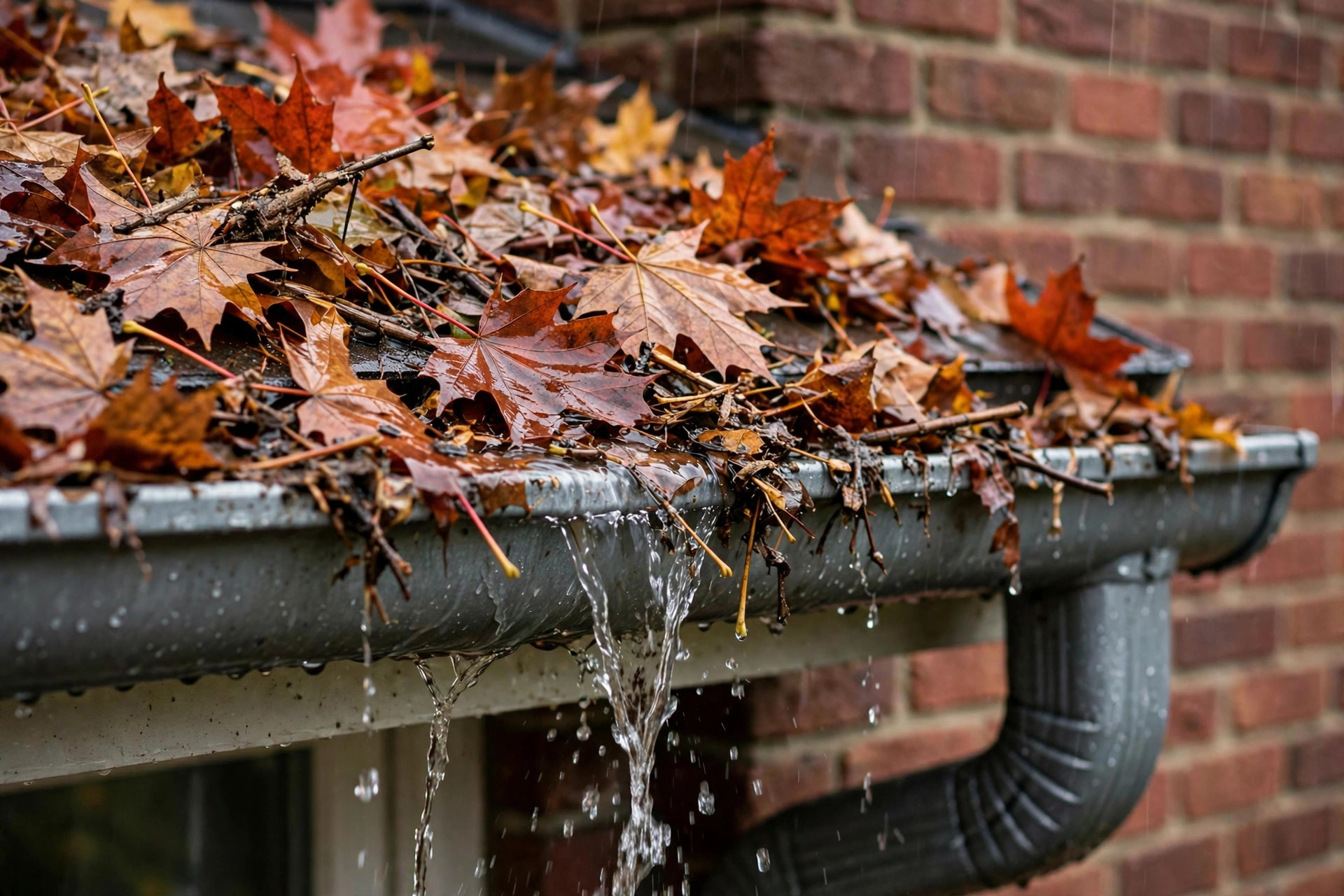
Don’t wait for the next downpour to find out. These are the tell-tale signs the troughs are past due:
- Waterfalls over the edge. If water sheets over the front of the trough during rain instead of exiting the downspout, there’s a blockage between your roof and the ground.
- Sagging sections or troughs pulling away from the fascia. A gallon of wet leaves weighs roughly 5 kg — a full trough can sag several centimetres, pulling the hangers out of the fascia board.
- Plants or seedlings growing in the trough. Enough soil-like compost has built up that seeds germinate. That means the trough hasn’t drained properly in months.
- Stains on the fascia or siding below the trough. Water is wicking behind the trough and sitting against the wood — the first stage of fascia rot.
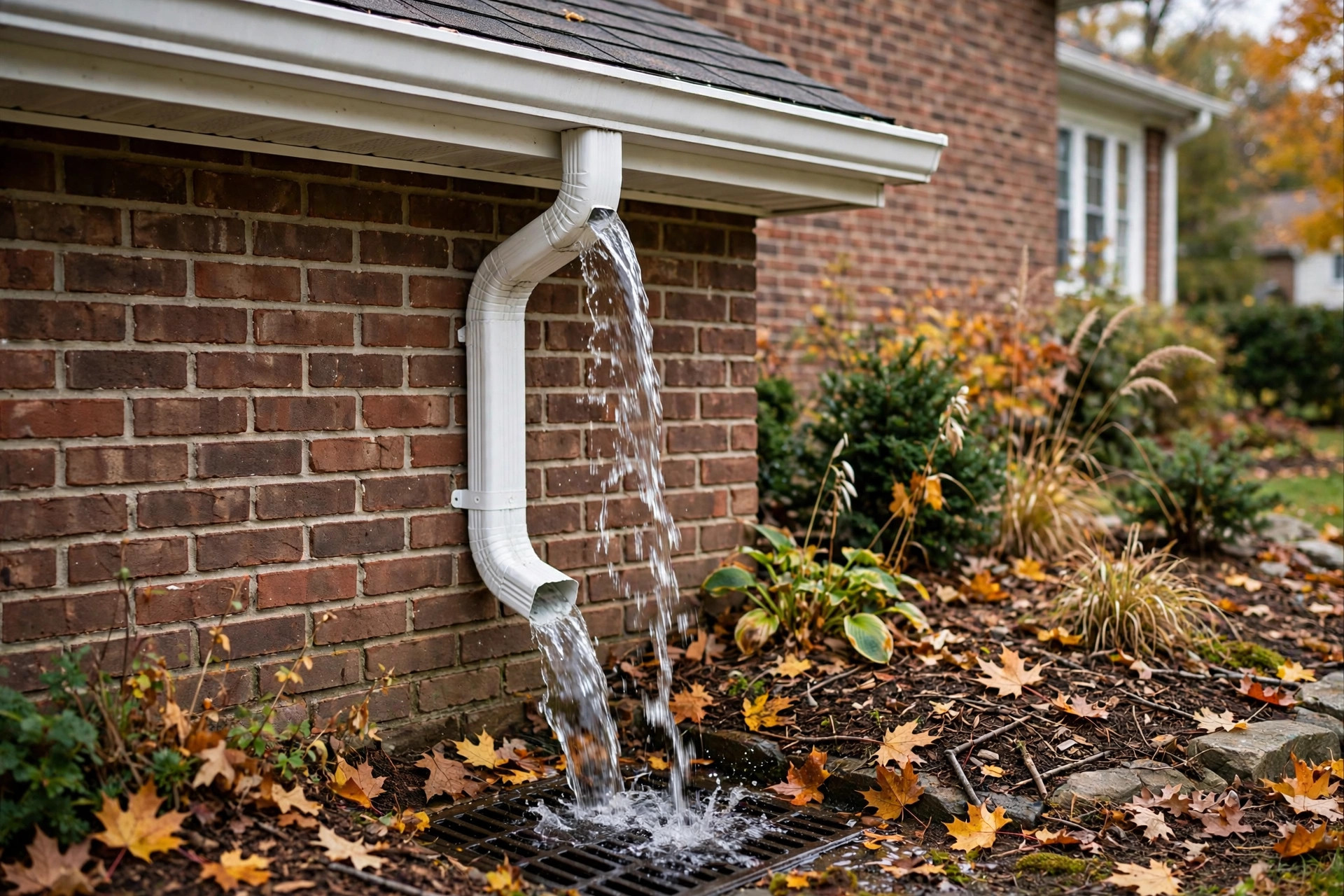
- Pooled water or damp spots near the foundation. When troughs overflow, roof runoff lands right at your foundation instead of being carried 4–6 feet away by the downspout extensions.
If two or more of these are showing on your home, the October window is your last comfortable chance to fix them before winter.
What a professional eavestrough cleaning actually includes
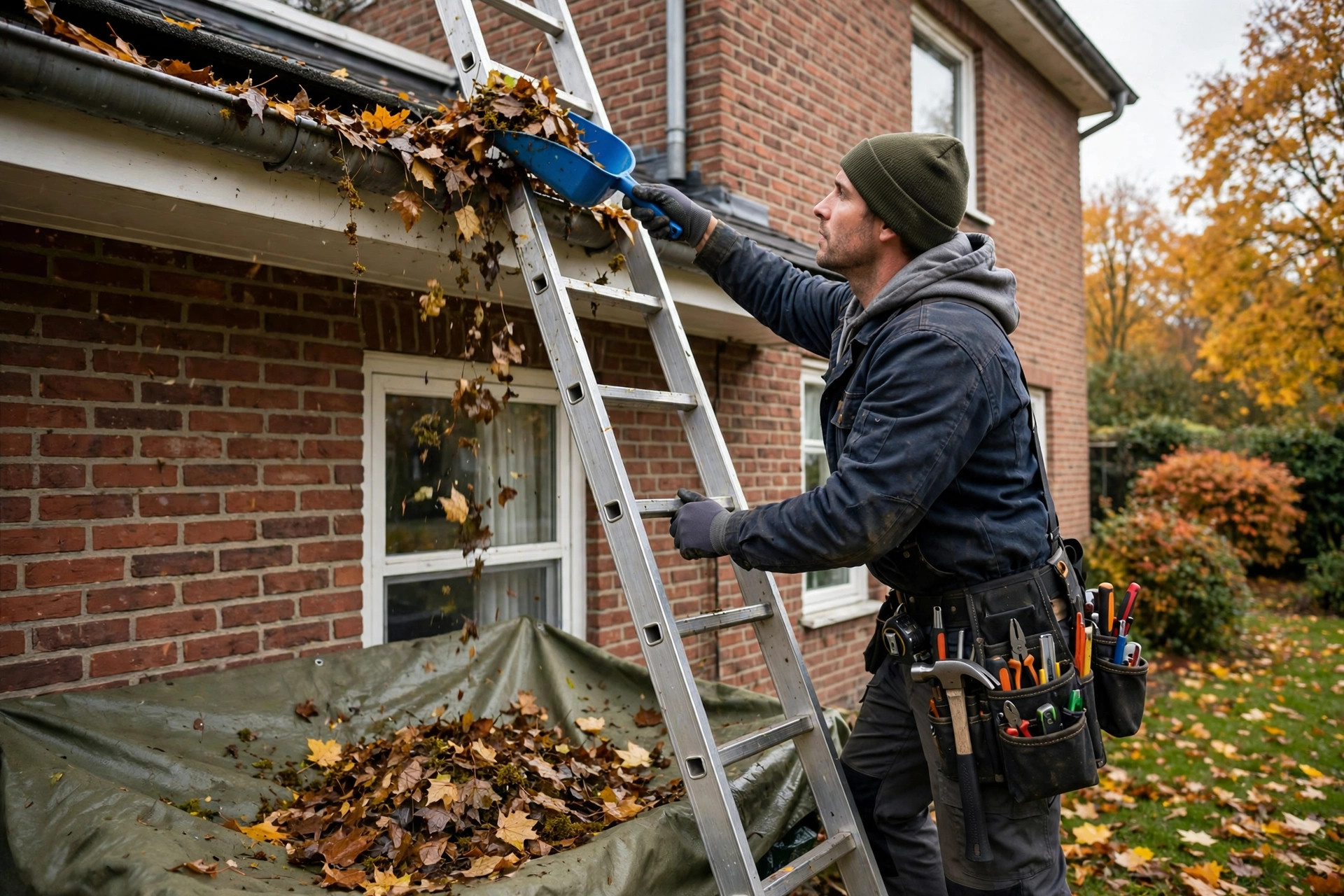
A real clean is more than someone blowing the leaves off your roof with a leaf blower. A proper eavestrough cleaning in Niagara should include six steps:
- Full scoop-out by hand or scoop tool. Wet, matted leaf mulch has to be physically removed — blowers leave the compacted layer behind, which is exactly what freezes solid in November.
- Downspout disassembly and flush. This is where most clogs actually live: the downspout elbow. A pro removes the bottom section, clears the blockage, and flushes from the top with a hose until water runs clean.
- Pitch check and re-hang. Sagging sections get their hangers tightened or replaced so water flows toward the downspouts again.
- Fascia and soffit inspection. While the trough is empty, the wood behind it gets a close look for soft spots, peeling paint, or rot that should be fixed before winter traps moisture there.
- End-to-end hose flush test. The whole system is flooded with water to confirm every downspout drains and every joint is leak-free.
- Gutter-guard assessment. An honest note on whether your roofline would benefit from guards — and an honest note when it wouldn’t.
Many homeowners pair the clean with a pressure washing of the fascia and siding below the troughs, since the same visit leaves streaks from the flush — one afternoon handles both jobs.
What clogged eavestroughs cost you in a Niagara winter
Niagara’s freeze-thaw cycles make neglected troughs expensive. When standing water in a clogged trough freezes, it expands and forms an ice dam at the eaves — trapped meltwater backs up under the shingles and soaks the sheathing. Fascia boards behind overflowing troughs rot faster in a climate that swings above and below freezing all winter. And when troughs overflow during November rain, roughly 200+ litres of roof runoff lands at your foundation in a single storm instead of being carried away — a recipe for basement seepage and walkway ice.
The fall clean is the cheapest winter insurance a Niagara homeowner can buy.
2026 eavestrough cleaning costs in Niagara
Typical 2026 pricing for a professional clean across Niagara — scoop-out, downspout flush, debris hauled away:
- Bungalow / ranch: $120–$180
- Two-storey: $180–$300
- Large or complex roofline: $250–$400
- Gutter guards, supplied and installed: $8–$15 per foot
- Downspout re-routing or extension: $100–$200
Be wary of quotes far below these ranges — a bargain clean that skips the downspout flush leaves the blockage that matters most still in the elbow.
DIY or hire a pro?
The honest answer depends on your house. A single-storey home with an accessible roofline, a stable extension ladder, and a spotter on the ground? Very doable as a Saturday project — work in sections, wear gloves (wet trough debris is foul), and flush each downspout when you’re done.
A two-storey? The eavestrough line sits 20+ feet up, and ladder falls are among the most common serious home injuries. A professional crew brings stand-off ladder stabilizers, works in pairs, and finishes a typical Niagara home in one to two hours. Local services like BuildNest handle eavestrough cleaning across Niagara as part of their exterior work, so if the heights aren’t for you, it’s worth a call rather than a risk.
FAQ: Eavestrough cleaning in Niagara
How often should eavestroughs be cleaned in Niagara?
Twice a year is the standard: late October or early November after the leaves are down, and again in late spring after maple keys, seed pods, and blossom debris finish falling. Homes under large trees may need a mid-summer check.
Can eavestroughs be cleaned in winter?
Only on dry days when temperatures are above freezing — and even then, it’s an incomplete job. Ice in the trough corners won’t scoop, wet ladders on frozen ground are dangerous, and downspouts often can’t be flushed.
Do gutter guards mean I never have to clean again?
No. Guards keep out large leaves but fine debris, shingle grit, and seeds still get through and compact underneath — guards themselves need lifting and cleaning every year or two. They’re a reduction in maintenance, not an elimination.
What happens if I skip the fall cleaning?
You gamble on a mild winter. In a bad year, clogged troughs lead to ice dams (shingle and sheathing damage), rotted fascia boards, and foundation overflow that finds its way into the basement. The fall clean costs a fraction of any one of those repairs.
How long does a professional cleaning take, and how do I book one?
One to two hours for a typical Niagara home, depending on stories and roofline complexity. Local handymen such as BuildNest (905-519-1011) usually quote the job on the spot with a photo of your roofline — book before the first hard freeze so you’re not stuck waiting in line.
If the troughs are already sheeting water over the edge on the next rainy day, that’s your answer — the last dry weeks of October are the time. For related exterior work, see BuildNest’s general handyman services in Niagara.