
Fence Installation Services Across the Niagara Region
August 23, 2026
Washroom Reconstruction & Bathroom Renovation in the Niagara Region
August 23, 2026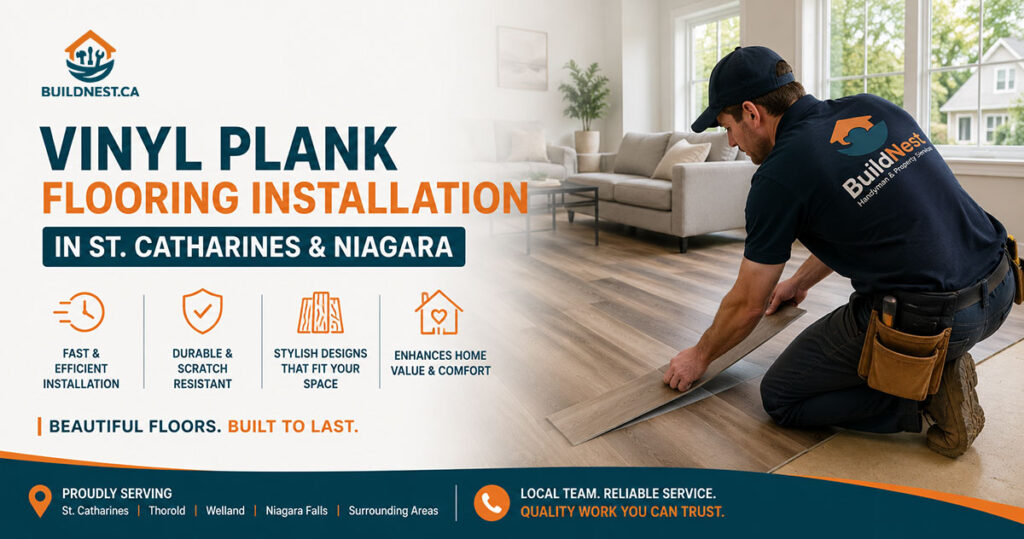
Why So Many Homeowners Are Switching to Vinyl
Luxury vinyl plank (LVP) has become the most requested flooring material BuildNest installs across St. Catharines and the Niagara Region, and for good reason. It looks like real hardwood or stone, costs a fraction of the price, is fully waterproof, and stands up to kids, pets, and the freeze-thaw humidity swings that come with Niagara’s climate. Unlike hardwood, it won’t cup or warp if a basement takes on a little moisture, and unlike laminate, water won’t destroy it at the seams. For homeowners renovating a basement, kitchen, or full main floor, it’s usually the best balance of looks, durability, and budget.
LVP vs. Sheet Vinyl vs. Vinyl Tile
Luxury vinyl plank (LVP) is rigid-core or flexible plank flooring that clicks together in a floating installation, mimicking wood plank sizing and texture. It’s the most popular option for living rooms, bedrooms, and basements.
Sheet vinyl comes in large rolls, glued or loose-laid, and is the most water-resistant option for a full bathroom floor where you want zero seams for water to find.
Vinyl tile (LVT) mimics ceramic or stone tile in individual squares, often used in bathrooms and mudrooms where a tile look is wanted without the cost and cold underfoot of real tile.
We’ll talk through which option fits your room, your budget, and how the space gets used before recommending a material.
Subfloor Prep: The Step Most Installers Skip
A vinyl floor is only as good as what’s underneath it. This is where a lot of budget installs go wrong — planks are laid over an uneven or damp subfloor, and within a year you’re seeing peaking at the seams or a floor that feels hollow underfoot. Before we lay a single plank, we:
- Check the subfloor for level using a long straightedge, and grind down or self-level any low spots
- Test for moisture in basements and concrete slabs, since vinyl is waterproof but trapped moisture underneath can still cause problems over time
- Remove old flooring, staples, or adhesive residue that would telegraph through the new planks
- Install an underlayment where it’s needed for sound dampening or added moisture protection
Skipping this step is the single biggest reason vinyl floors fail early, and it’s the step we never cut corners on.
Our Vinyl Flooring Installation Process
1. In-home measurement and material selection — we measure the space and help you choose a plank style and finish. 2. Quote — one all-in price covering materials, subfloor prep, underlayment, and installation. 3. Old flooring removal — carpet, tile, or worn vinyl is pulled and disposed of. 4. Subfloor prep — levelling, moisture check, and cleaning as outlined above. 5. Installation — planks are laid with proper expansion gaps at the walls, staggered seams, and trimmed cleanly around obstacles. 6. Trim and transitions — baseboards, quarter round, and transition strips are installed for a finished look. 7. Final walkthrough — we check the full floor with you before wrapping up.
Vinyl Flooring for Basements, Kitchens & Bathrooms
Basements are one of the best applications for vinyl in Niagara homes — it tolerates the occasional damp spell far better than hardwood or laminate. In kitchens, it handles spills without the seam damage sheet laminate suffers. In bathrooms, sheet vinyl or well-sealed LVP gives you a waterproof floor at a lower cost than full tile, though we’ll always flag if a wet area is better served by tile depending on your usage.
How Long Installation Takes
A standard room (bedroom, living room) typically takes 1 day. A full main floor or basement can take 2 to 4 days depending on square footage and how much subfloor prep is needed. We’ll give you a realistic timeline once we’ve measured the space and assessed the existing subfloor.
What Vinyl Flooring Installation Costs
Cost depends on square footage, the plank or tile product selected, how much subfloor prep and old-flooring removal is required, and whether new trim or transitions are needed. BuildNest gives one clean, all-in price rather than a long itemized quote, so there’s no guessing what the final invoice will look like.
Caring for Your New Vinyl Floor
Vinyl is low-maintenance but not maintenance-free. Sweep or vacuum regularly to keep grit from scratching the surface, use furniture pads under heavy pieces, and clean spills promptly even though the floor is waterproof — standing liquid can still seep into seams over time on sheet vinyl. Avoid steam mops, which can force moisture under the planks and loosen adhesive over the long run.
Frequently Asked Questions
Can vinyl go over my existing tile or hardwood? In many cases yes, as long as the existing floor is flat and stable — we’ll assess this during the site visit.
Is vinyl flooring good for a basement with a history of dampness? Vinyl handles occasional moisture far better than wood or laminate, but if there’s an active water issue, we’ll recommend addressing that first.
How long will a vinyl floor last? A well-installed LVP floor typically lasts 15 to 25 years with normal use.
Is BuildNest insured for flooring installation? Yes — BuildNest is fully insured for all interior renovation and flooring work.
Ready to update your floors? Call BuildNest at 905-519-1011 or email Support@buildnest.ca for a free quote. Built Right. Every Time.