

How to Draft-Proof Your Windows in Canada Before Winter: A DIY Guide (2026)
October 21, 2026If your social feeds have been full of dramatic before-and-afters of windows lately, you’re not imagining it. Window treatments are having a genuine moment: TikTok creators are layering sheer panels under heavy drapes, designers are preaching high-and-wide rod placement, and one creator’s button-chain curtain project (roughly 35 to 40 hours of work, about $90 to $100 in materials, per a Hunker report this week) proved that people will go to remarkable lengths for a statement window. The trend is real — but the part the 30-second videos skip is the installation. A layered look only looks effortless when every bracket is level, every rod is anchored into something solid, and the measurements were done before a single hole was drilled.
This guide covers the 2026 window-treatment trends St. Catharines homeowners are actually asking for, how professionals hang curtains and blinds so they look (and work) the way the videos promise, and what the work typically costs across the Garden City. Whether you hang them yourself or call in help, the rules below are what separate a designer look from a drooping-rod headache.
Why Everyone Is Layering Curtains in 2026
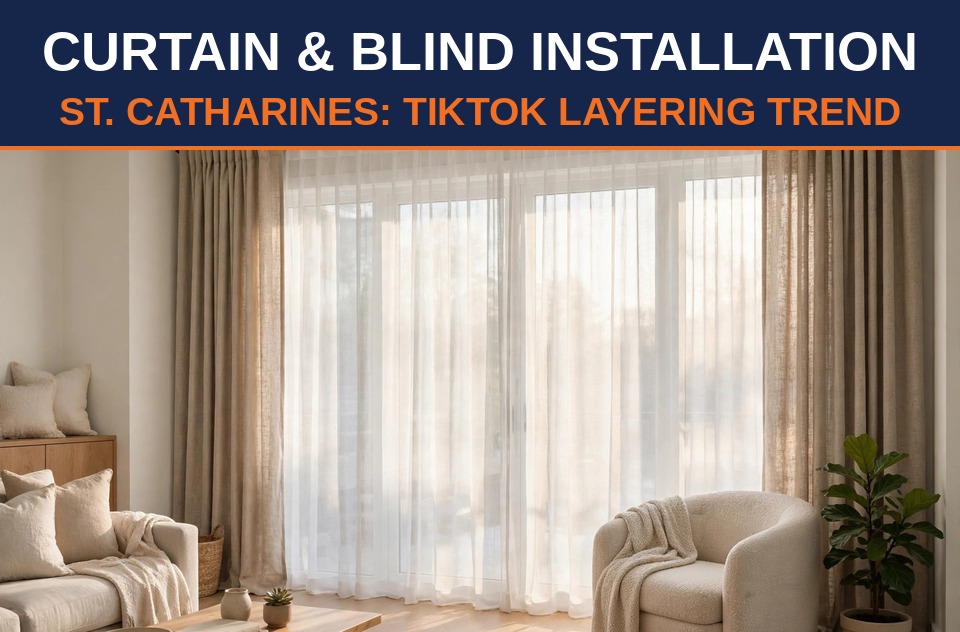
The look dominating feeds right now is simple: a sheer, light-filtering panel closest to the glass, with a heavier lined drape on a second rod (or a double rod) in front. During the day, the sheers stay closed for softness and daytime privacy while daylight pours through. In the evening, the drapes close for full privacy and a surprising bonus — an extra layer of insulation against the window, which matters once Niagara nights turn cold.
Designers like the pairing because it solves the classic curtain dilemma. Sheers alone give you no evening privacy. Blackout drapes alone make a room feel cave-like by day. Together, you get options at every hour — plus the texture contrast (crisp sheer against nubby linen or velvet) that makes the whole window look styled rather than just covered.
The 2026 Styles Worth Knowing
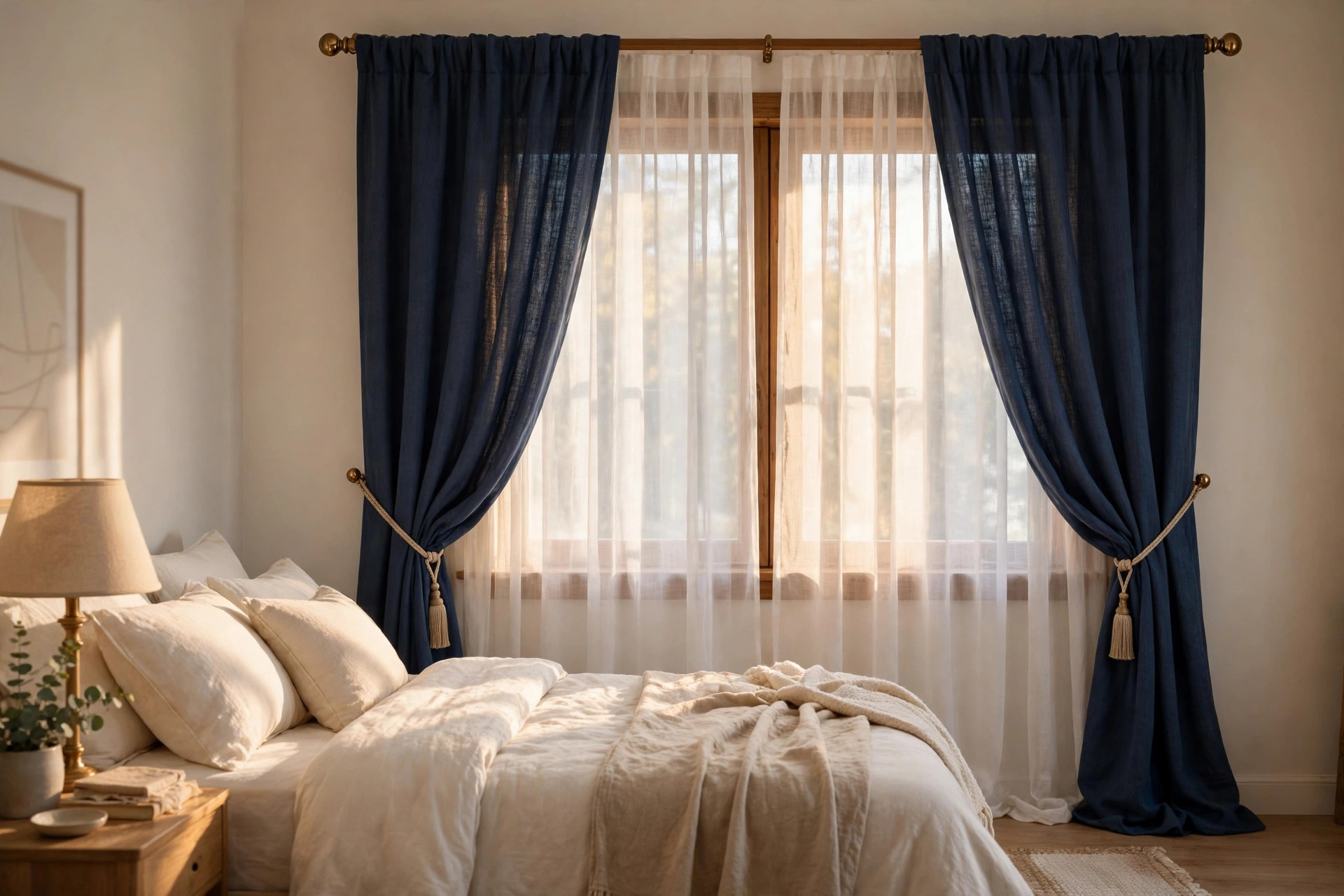
Sheer + blackout layering. The headline trend. Textured linen and relaxed cotton sheers are the favourites; paired drapes run toward earthy neutrals, warm whites, and deep navy.
Slim, nearly invisible hardware. Chunky finials are out; thin matte-black or brushed-brass rods that disappear into the design are in. The rod should support the look, not star in it.
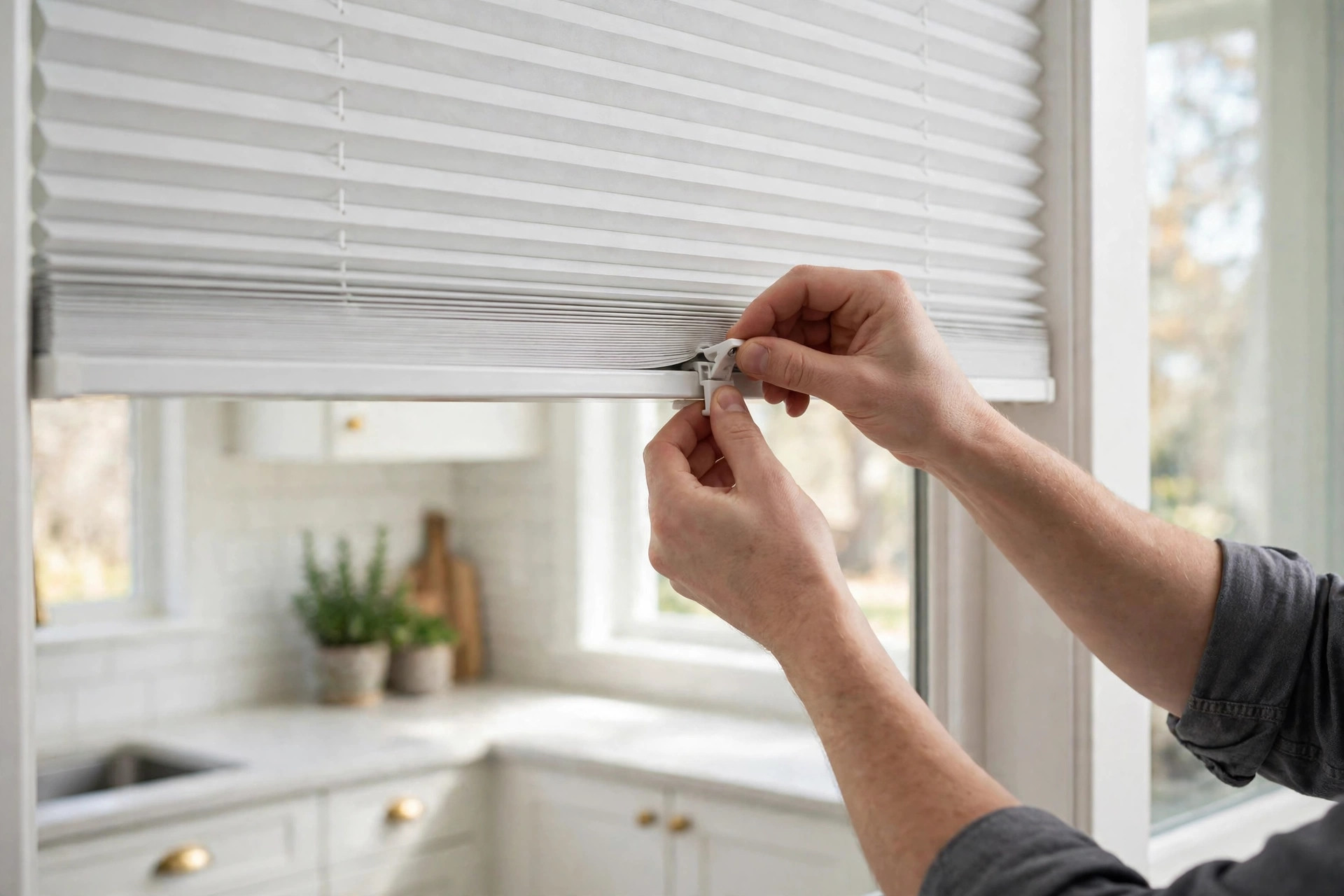
Cellular (honeycomb) blinds. The practical pick for 2026. Their air-trapping pockets add real insulation at the window, and cordless operation has become the norm in Canada under strengthened cord-safety rules — important in homes with kids or pets.
Statement accents, kept honest. That viral button-chain curtain? Charming as a decorative accent panel — but the same reports are clear it provides almost no privacy or light control. If you love the look, hang it over a functional blind or sheer, never instead of one.
How Pros Hang Curtains: The Rules That Matter
This is where installations succeed or fail. These are the rules a professional follows on every window, and they’re worth knowing even if you’re DIY-ing:
1. Hang high and wide. Mount the rod 4 to 6 inches above the window frame and extend it 3 to 6 inches past the frame on each side. Panels should just kiss the floor (or hover half an inch above it). This is the single biggest difference between “custom” and “off-the-rack” looks.
2. Measure twice, buy once. Measure the window width, then the rod span, then the drop from rod to floor — three numbers, written down. For layered treatments, measure both rod positions. Most returns at home stores are measurement mistakes.
3. Anchor into something real. A lined drape panel can weigh several kilograms, and two layered panels double that. In St. Catharines’ older neighbourhoods — think the streets around Port Dalhousie, Glen Ridge, and downtown — many walls are plaster and lath, which crumbles around a plain screw. Pros find the studs with a proper stud finder and use snap-toggle anchors where studs aren’t available. A rod that pulls out of the wall at 11 p.m. is a classic DIY casualty.
4. Level everything. A rod that’s off by even a few millimetres reads as sloppy from across the room. A small bubble level is non-negotiable; pros check level after the first bracket is set, not just at the end.

Blinds: Inside Mount vs. Outside Mount
Blinds get their own decision tree. An inside mount (fitted within the window frame) looks crisp and architectural, but it demands a frame deep enough to hold the headrail — measure the depth, not just the width. An outside mount (covering the frame and a bit of wall) is more forgiving, blocks more light around the edges, and is the better choice for shallow or out-of-square frames common in older St. Catharines homes.
For households with young children, go cordless without debating it. Cordless cellular and roller blinds are widely available, easy to operate, and eliminate the strangulation hazard that corded blinds carry. It’s also worth noting that layered treatments and blinds aren’t rivals — blinds handle the precise light control, curtains handle the style and insulation. Many of the best-looking windows in 2026 have both.
The Mirror Trick for Dark Hallways
Here’s a bonus straight from this week’s design coverage: with sunset now arriving before dinner, small rooms and hallways are going dark early. Hanging a mirror opposite or adjacent to a window bounces the remaining daylight deeper into the room and makes tight spaces feel larger. The installation rules are stricter than they look — a large mirror is heavy, and the same stud-or-toggle anchoring logic that applies to shelves and mirrors applies here. Hang it at a height where it reflects the window, not the ceiling, and use proper mirror clips or a French cleat rather than a single wire on one hook.
What Curtain and Blind Installation Costs in St. Catharines (2026)
Professional installation is usually priced per window, and most St. Catharines homes need several done in one visit — which is exactly why bundling matters:
- Curtain rod + panels, single layer: $40–$80 per window (labour; hardware and panels extra)
- Layered treatment (double rod + sheers + drapes): $80–$150 per window
- Blinds (cellular, roller, or faux-wood): $25–$50 per window
- Mirror hanging (medium to large): $40–$100 depending on size and wall type
- Whole-home package (8–10 windows, mixed treatments): $300–$600 labour
Prices climb when walls are plaster and lath (slower anchoring), windows are oversized, or the job includes patching old bracket holes and touch-up paint. A handyman visit that bundles curtain hanging with a few other small jobs — a service outfits like BuildNest in Niagara typically structure this way — usually works out cheaper per task than booking each one separately.
DIY or Call a Pro? An Honest Breakdown
Hanging a single curtain rod on a modern drywall wall, into a stud, with a level and a drill you’re comfortable using? That’s a fair Saturday project — budget an hour per window the first time, half that once you’ve got the rhythm.
Call a professional when: the walls are plaster and lath (common in pre-1970s St. Catharines homes), you’re doing layered treatments across many windows, the windows are tall or over a staircase, you’re mounting heavy mirrors, or you’ve already got one rod pulling out of the wall and don’t want a repeat. The cost of a pro visit is usually less than the cost of patching a botched job — and a pro will have every window in the house done in the time it takes most people to finish two.
Frequently Asked Questions
How high should I hang my curtains?
Mount the rod 4 to 6 inches above the window frame — or closer to the ceiling for a dramatic, height-adding effect. Extending the rod 3 to 6 inches beyond each side of the frame lets the panels stack off the glass, so you don’t lose daylight when they’re open.
Can I hang heavy drapes on plaster walls?
Yes, but not with the plastic anchors that come in the box. Plaster and lath needs studs located with a proper finder, or snap-toggle bolts rated for the load. This is the number one reason curtain rods fail in older St. Catharines homes.
Are cordless blinds worth it?
For most households, yes. They’re safer for children and pets, they look cleaner without dangling cords, and the price gap over corded blinds has narrowed considerably. They’re now the default recommendation from most installers.
Should I layer curtains over blinds?
It’s one of the best combinations available: blinds give you precise light and privacy control, curtains add insulation, sound softening, and style. Install the blind first (inside mount if the frame allows), then hang the curtains high and wide over it.
How long does professional installation take?
A single window runs 30 to 60 minutes for curtains, 20 to 40 for blinds. A whole house — say eight to ten windows with a mix of treatments — is typically a half-day visit. If you’re comparing quotes in the St. Catharines area, a quick call to a local handyman service (BuildNest, for example, at 905-519-1011) will usually get you a per-window price on the spot.